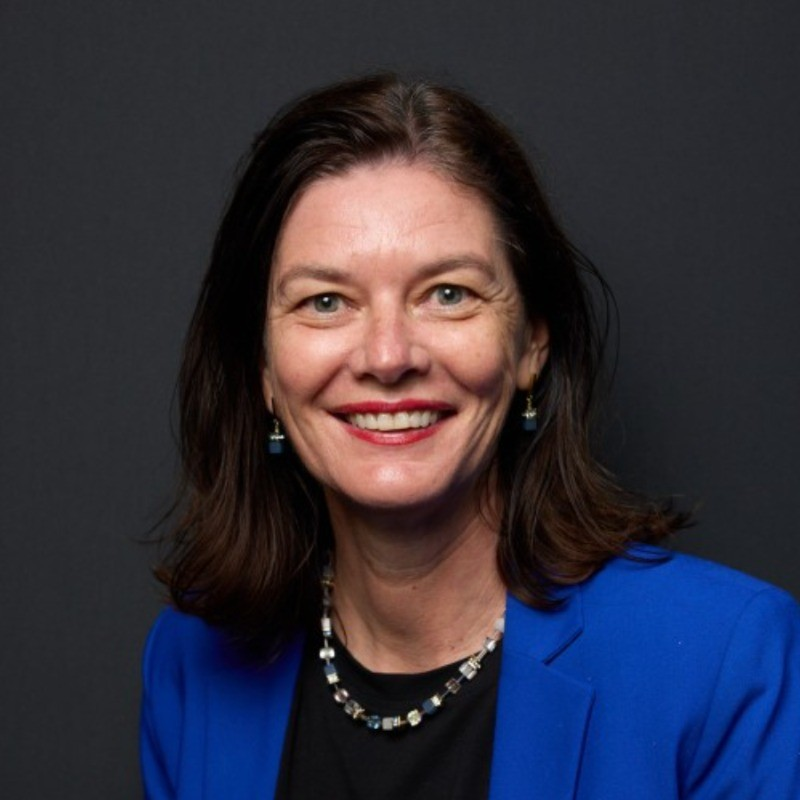
In this edition of Cyber Leaders on the Move, we sit down with Vannessa, Cyber Risk Leader, AWSN mentor, speaker, INCITE judge and Cyber Leadership Institute alum. We explore her journey into cyber security and discuss women in leadership and diversity of thought.
Vannessa grew up in Geraldton, a regional Western Australian town about 400km north of Perth. She was grounded in a hardworking upbringing with a father who worked as a shearer and grandparents who were farmers. Her first role model was her mum, whose ability to juggle multiple responsibilities instilled a quiet confidence in Vannessa that she could achieve anything she set her mind to.
School opened new opportunities, and she quickly developed a passion for learning. Vannessa understood that her dedication to academics could open doors. Her hard work paid off, and she became the first in her family to attend university, leaving Geraldton for Perth. Vannessa initially undertook a Bachelor of Arts and spent 12 months on exchange in the United States. This experience abroad helped solidify her career aspirations, leading her to return to Australia with a clear focus on earning a law degree.
Following university, Vannessa entered Telstra’s graduate program, working on process improvement across business units during a pivotal moment in technological development. 'It was the information superhighway,' she recalls. As innovations like mobile data and the shift to internet protocol-based systems emerged, Vannessa actively contributed to these advancements, steadily climbing the corporate ladder.
Vannessa’s ascension to leadership was part of her career plan for a few years, however, when her desired role became available, she was seven months pregnant. Encouraged by her boss, Vannessa applied and stepped into her first leadership role when her daughter was nine months old. Telstra’s flexible work policy enabled Vannessa to excel in her career while raising a family. ‘I remember when my children were born, carrying around a Blackberry answering emails and calls,’ she laughs. ‘I really loved the role. A lot of work I still do is focused on people and building great teams.’
Vannessa transitioned into business applications and infrastructure transformation, managing large-scale incident response across South Australia, Northern Territory and Western Australia at a tumultuous time. ‘We had the wave of bushfires, cyclones, major national outages and then COVID,’ she recalls. The work was fast-paced and required adapting services quickly to meet evolving needs, and she thrived under pressure.
When approached for a role in security operations, she seized the opportunity, drawing on her skills in communication, root-cause analysis, and incident management. Post-COVID, Vannessa led the security operations for Australia’s largest privately owned IT company, overseeing the protection of about 20 clients. Most recently, Vannessa has been the Australian Lead for Security at Avanade, a global company with around 6000 employees.
When asked about balancing work and motherhood, she declares, ‘There’s no such thing as balance—the word I prefer is navigating.’ Pointing to great inventors and artists, Vanessa explains that their accomplishments come from focus which requires sacrifice, leading to: ‘The spillover and splashback effect—at times, family will spill into work, and other times, work demands will spill into weekends and evenings. And that’s okay,’ Vannessa says, explaining how you regain some of the earlier invested time as you settle into a role.
As a highly influential executive in a male-dominated industry, Vannessa faces unique challenges, including high expectations for technical expertise and leadership competency. She navigates the double bind of being perceived as either too assertive or too soft, stating, ‘There’s no Goldilocks spot.’ Vannessa acknowledges that we all see the world through different lenses, and rather than fight preconceived notions, she focuses on listening, connecting, and building relationships.
Vannessa’s journey highlights a broader issue in cyber security: the lack of female representation in senior leadership roles. The problem is partly a lack of women pursuing STEM degrees, but retention is the bigger issue. As Vannessa notes, ‘Looking at IT, you might have 20–30% of women in those roles, but within ten years, 40% of them leave. We have a really hard job of retaining women in tech.’
To address retention issues, Vannessa recommends building a talent pipeline. ‘If you can’t find women for the job right now, think, what are you going to do so next time you look, there are more women in this pipeline?’ She emphasises that we must create programs that make the industry more attractive while identifying and coaching women, arming them with confidence to apply for roles even when they don’t meet the full criteria. Vannessa actively contributes to this pipeline in a reciprocal mentoring program at Avanade and by mentoring and educating women in security through the Australian Women in Security Network (AWSN).
‘Sometimes we think that stepping into a mentoring relationship means committing for two years, but the mentoring needed might just be a half-hour conversation on a particular topic,’ she explains. She recalls recently reaching out to an executive for a brief chat, who gave her a new way forward with their unique perspective on a challenge she was facing.
Communities can be a valuable source of mentors, and I ask about her journey to the Cyber Leadership Institute (CLI). A few years ago, while in a consulting role, she sought a resource for strategic building and prioritising initiatives. Discovering CLI, she realised it could provide her support, leading her to enrol in the Cyber Leadership Program (CLP).
Having completed an MBA earlier in her career, Vannessa found that the CLP perfectly blended her passion for cyber security with the strategic insights she gained from her MBA. The insights Jan, Darren, and Phil shared regarding people and influence helped her navigate the executive landscape and encouraged her to experiment with new approaches in her work.
‘What sat behind it [the CLP] was some really amazing resources and a content library that was incredible,’ she says. Vannessa leveraged the targeted resources to discover best practices to apply to her client’s cyber strategy.
After completing the CLP, Vannessa pursued the Cyber Strategy and Transformation Program (CSTP) while her organisation was working to establish a secure operations environment with approximately 800 security controls. The CSTP helped her connect the dots between her projects, customer needs, and the intricate tasks involved in building budgets, culture, people, and governance.
Not long later, Vannessa undertook the Elevate Your Personal Brand Program (EPB). ‘There was an incredible amount of gold in that program,’ she shares. Unpacking the content, Vannessa experimented with ideas piece by piece, measuring the impact along the way.
‘The thing I really enjoy about the Cyber Leadership Institute is that you do the course, and then you have access to the material for a year, or if you maintain your membership…you can keep going back to those materials and soak in them like you would a bath,’ Vannessa shares.
Following advice from Phil in EPB, Vannessa began consistently writing on LinkedIn, publishing works in journals and talking at conferences. Through conscious effort and sharpening her skills, Vannessa mastered presenting at conferences, using stories to make memorable and influential presentations.
After 12 months of strengthening her brand, a recruiter contacted her, offering a role. ‘You have to step into the spotlight; the spotlight will not find you,’ Vannessa explains. ‘If I had played it small, the opportunity wouldn’t have arisen. I can confidently say building on the three programs [CLP, CSTP, EPB] over two years has had a transformative effect on my career and personal journey.’
Vannessa’s drive, ambition, love of learning, and curiosity shine through our conversation, and it’s evident that her career is fulfilling and rewarding. As a leader in an ever-evolving industry like cyber security with its challenges and complexities, I’m curious how Vannessa unwinds. She explains that her work and studies engage her mind, so she seeks activities that reconnect her with her body in her spare time.
For nine months each year, she meets a group at the beach to swim every morning at 6:30 am. ‘I say swim, but it’s probably more bob and talk,’ she laughs, explaining that it’s about basking in the day’s beauty and feeling exhilarated to be alive. Vannessa also surfs and skates — activities that require being present and engaged. ‘It’s got a real flow about it,' she says.
Vannessa also experiences flow in her creative endeavours of painting, drawing, and working with pastels. She recalls a challenging work problem that reached a dead end and explains how she brought creativity into her workplace after thinking, ‘How do we change the process so we unlock everyone’s voice?’
Drawing on her research of Lego building, Vannessa introduced Lego to her workplace to encourage her team to think with their hands and build, then explain their creations. ‘What we unlocked by a process that was focused on being creative with the hands and listening was just amazing,’ Vannessa recalls.
The Lego box is now part of her repertoire to facilitate problem-solving. Creating opportunities for everyone to share their views and structuring silence and space into meetings are other ways Vannessa encourages diversity of thought.
By demonstrating care and remaining curious, Vannessa believes teams can overcome challenges and drive solutions. Vannessa says we must create a psychological culture encouraging teams to ask for help and own up to their mistakes. ‘Let’s be curious. In the interest of getting it right, let’s leave the ego aside and help each other and solve the problem in a way that there’s no blame, and if someone gets something wrong, let’s peel it apart and learn from it together,’ Vannessa shares.
I liken this to debriefs in the medical field, a sentiment with which Vannessa emphatically agrees, noting the valuable lessons we can draw from other industries, such as emergency services. ‘They train for crises, brief and debrief and practice how they respond,’ she says, emphasising the importance of applying this in cyber security.
Impactful communication is central to how Vannessa motivates her team. During a speech at The Cyber Leadership Imperative book launch, she emphasised the power of language and tailoring communication to the audience. By framing security as a collective responsibility within her organisation, Vannessa noticed a shift in mindset. People began to take ownership of their roles: ‘Security doesn’t rest on the shoulders of one person in an organisation,’ she states.
Reflecting on her journey, Vannessa underscores the transformative power of stepping outside one's comfort zone. She explains you need to show up, observe and build your network. Rather than waiting for permission or an offer, Vannessa emphasises, ‘Opportunity happens at the edge; it won’t happen where you are right now.’